
Just in time for the holidays, a write-up of some great books about Richmond and/or specific neighborhoods or other areas. Stop by Fountain Bookstore or Black Swan and see if you can pick up a copy in person or hit the links below to order online.
In no particular order…
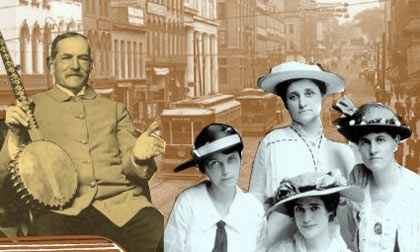
Carlton McKenney’s Rails in Richmond
A history of Richmond’s horse-drawn and electric trolleys, with photos and maps. Fantastic.
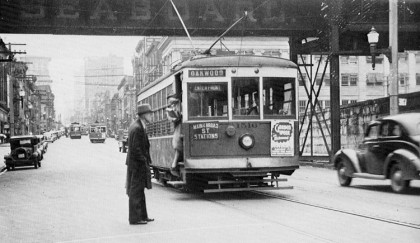
Ann Field Alexander’s Race Man: The Rise and Fall of the Fighting Editor
A fascinating look at Richmond and especially Jackson Ward and the African-American experience at the turn of the last century as seen through the perspective of the life of Richmond Planet publisher John Mitchell. One of my heroes.
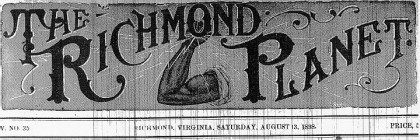
Veronica Davis’ Here I Lay My Burdens Down: A History of the Black Cemeteries of Richmond, Virginia
Davis is still fighting the good fight for Evergreen. Read this and Built by Blacks to get the details on that mess, or see for your self.
Elvatrice Parker Belsches’ Richmond, Virginia (Black America Series)
120-page book with photos from around Richmond, a good half or more of the book is from Jackson Ward. The 10 chapters of photos include buildings, events, and portraiture (including a young Doug Wilder, and a stunning photo of 95-year-old Edward R. Carter – the only Reconstruction-era councilman who lived to see Oliver Hill elected in 1948). The book is fascinating for the history that is overlaid on almost every building in Jackson Ward, but equally wrenching as many of the buildings are gone or continue to decline (Elks Lodge, Hotel Eggleston, the Hippodrome).

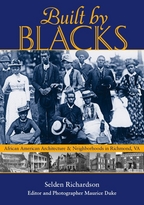
Selden Richardson’s Built by Blacks: African American Architecture and Neighborhoods in Richmond, VA
Richmond’s black architecture and neighborhoods and the founding of Richmond. Essential.
Historic Photos of Richmond
200-page. A nice collection of photos from around the city. The emphasis seems to be on the more common areas, in attempt to provide a portrait of Richmond through the years. There are photos from many of the other neighborhoods, though downtown seems to get the most attention. Lacking in Church Hill images.
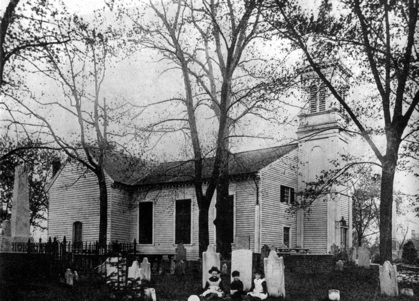
Harry M. Ward’s Richmond During the Revolution, 1775-83
A crucial time for the city, with the move of the capital from Williamsburg and the war. Gives a good account of the time prior as well.
Michael B. Ghesson Richmond After the War 1865-1890
The title of the book is very clear about the topic of this book, yes.
Pamela K. Kinney Haunted Richmond
Harry Kollatz’ Richmond in Ragtime: Socialists, Suffragists, Sex & Murder
In the words of the author: “This is a narrative, bricolage style, covering just three rambunctious years, 1909-1911.”
Harry Kollatz’ True Richmond Stories
A collection of 40 or so of Kollatz’ “Flashback” columns from Richmond Magazine. Released in late 2007. The stories span Richmond history from 1607 until just a few years ago, and range across the city.
Mary Wingfield Scott’s Old Richmond Neighborhoods
The one must-have book for anyone interested in the history and development of Richmond’s oldest neighborhoods.

Church Hill: The St. John’s Church Historic District
Bon Air, A History
Richmond’s Fan District
Some neighborhoods/districts have their own books with specific detail that you won’t see in the more broad histories. For the real
geekenthusiast, get a copy of the DHR application printed and bound.Mordecai’s Richmond in By-Gone Days
Samuel Mordecai’s 1856 book, “an invaluable resource”, surveyed over 150 years of Richmond’s history.
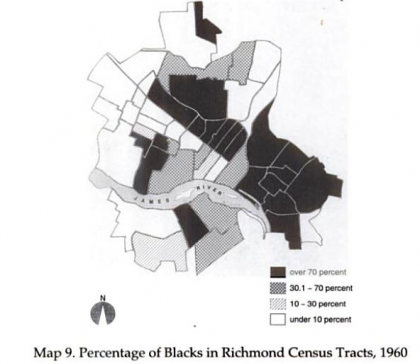
Silver and Moeser’s The Separate City: Black Communities in the Urban South, 1940-1968
“The districts in which southern blacks lived from the pre-World War II era to the mid-1960s differed markedly from those of their northern counterparts. The African-American community in the South was (and to some extent still is) a physically expansive, distinct, and socially heterogeneous zone within the larger metropolis. It found itself functioning both politically and economically as a “separate city” – a city set apart from its predominantly white counterpart. Examining the racial politics of such diverse cities as Atlanta, Richmond, and Memphis, Christopher Silver and John Moeser look at the interplay between competing groups within the separate city and between the separate city and the white power structure. They describe the effects of development policies, urban renewal programs, and the battle over desegregation in public schools. Within the separate city itself, internal conflicts reflected a structural divide between an empowered black middle class and a larger group comprising the working class and the disadvantaged. Even with these conflicts, the South’s new black leadership gained political control in many cities, but it could not overcome the economic forces shaping the metropolis. The persistence of a separate city admitted to the profound ineffectiveness of decades of struggle to eliminate the racial barriers with which southern urban leaders – indeed all urban America – continue to grapple today.”
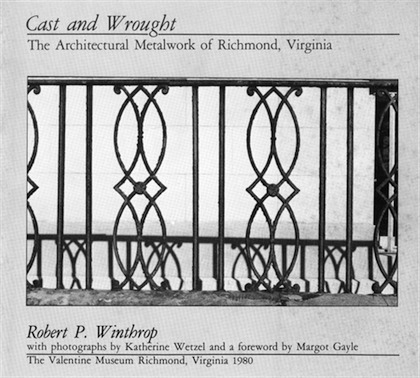
Robert P Winthrop’s Cast and Wrought: The Architectural Metalwork of Richmond, Virginia
Richmond’s architectural cast iron is second only to that of New Orleans, yet it is hardly recognized. Over 130 porches and balconies, hundreds of yards of elaborate fencing, as well as scores of cast iron front buildings remain in the city today and make up the bulk of the city’s architectural metalwork.


28 comments
Lesbian and Gay Richmond — http://www.amazon.com/Lesbian-Gay-Richmond-Images-America/dp/0738553689
How about Richmond: The Story of a City?
http://www.amazon.com/Richmond-Story-City-Virginius-Dabney/dp/0813912741/ref=sr_1_1?ie=UTF8&s=books&qid=1227403127&sr=8-1
A couple more:
Ploughshares into Swords: Race, Rebellion, and Gabriel’s Virginia
Rights of a Season: the Politics of Race, Class and Gender in Richmond, Virginia
The new Byrd theater book is really great
http://members.tripod.com/~g_cowardin/byrd/index.htm#BOOK
I can’t remember the exact title but the small book on Richmond street names is pretty good.
This one?
Facts and Legends of Richmond Area Streets
http://www.powells.com/biblio?isbn=9780813913728
The Color of Their Skin: Education and Race in Richmond, Virginia, 1954-89 (Carter G. Woodson Institute Series in Black Studies)
by Robert A. Pratt
ISBN13: 9780813913728
ISBN10: 0813913721
Publisher Comments:
The first major study of school desegregation in a Virginia locality to appear in over twenty-five years, The Color of Their Skin traces the evolution of the Richmond public schools from segregation to desegregation to resegregation over the decades following the Brown decision.
Robert A. Pratt explores the undercurrents of white opposition to the dismantling of the “separate but equal” system and analyzes the overall impact of the process on the life of the city.
In doing so he has given us a portrait of a society moving, in some ways, backward in time. Although Richmond’s “passive resistance” to integration was not unique, it was notable for having occurred within the broader context of statewide “massive resistance”.
The schools of Richmond, unlike those in some other localities in Virginia, remained open but segregated, a policy designed to avoid integration without flagrant defiance of the law. By choosing this subtler form of defiance, city officials were able, in effect, to stave off integration for nearly two decades.
The Color of Their Skin also covers Richmond politics concerning the issue. The clash of conservative idealogues such as James J. Kilpatrick and former governor Mills Godwin with activist black attorneys like Oliver W. Hill and Samuel W. Tucker bred a “conservatively” moderate element that was represented on the Richmond school board by the likes of board president (and later Supreme Court Justice) Lewis F. Powell.
Powell attempted to chart a course between the extreme factions, a course that Pratt accurately describes as “tokenism”, since only a handful of blacks was ever admitted to Richmond’s schools until the 1970 school busing decree.
Pratt demonstrates howthe impact of school desegregation was felt beyond the schools, in the demographics of the city itself. Because of the glacial slowness of the integration process, intransigent whites had time to flee the city school system and to establish their children in private or suburbs.
@ Anne, Carol, Jason — Thanks, I hadn’t seen those before.
@ Jason G.- Since you mentioned “Ploughshares Into Swords” On wed. nov. 26 there is a FREE lecture on Gabriel’s rebellion at 7pm at FRC in Church Hill, in case you didnt know.
Great book titles… so much to choose from.
Unfortunately when you see a book that has “Church Hill” in its title, they only cover the old “St John’s District” south of Broad and not the currently older existing area North of Broad. When will someone address our area on the Nortn side of the street (including old Shedtown)?
The neighborhood is covered in some detail in Mary Wingfield Scott’s book Old Richmond Neighborhoods, and to a lessor degree in Paul Dulaney’s The Architecture of Historic Richmond.
Winston… I have both but each is mainly a small assessment of a few houses or houses long gone and the Scott book is almost 60 years old and the Dulaney book is over 40 years old. An area definitely needing updated!
Since I have done a history on our house and the 400 block of N 27th in general… I ran across various people and comments stating there is or was little to no research ever done on the North side of Broad. Sounds like a perfect opportunity for someone to write one now since most of the houses on the south side are newer than some on the north side which has been neglected most likely due to an old mentality about demographics even early on?
Eric
Should I list what I have? I’m not sure if some are even in print anymore.
whatcha got?
Well… of the above in the first post,
numbers 1, 3, 5, 6, 11, 12, and 13’s Church Hill and Fan District books.
At the Falls by Marie Tyler-McGraw (90s)
Old Richmond Today … well in the 80s
Celebrate Richmond by Elisabeth and Wayne Dementi
Historic Photos of Richmond Turner Publishing
Old Richmond Neighborhoods as mentioned above
General Lee’s City by Richard M. Lee
Henrico County by Dr. Louis H. Manarin
Richmond on the James by Louis H. Manarin
Then & Now Richmond by Keisha A. Case
Maritime Richmond by Dale Totty
Richmond Virginia (Black America Series) by Elvatrice Parker Belsches
Foster’s Richmond by Sara B. Bearss and Patricia D. Thompson
The Ghosts of Richmond …and Nearby Environs by L.B. Taylor, Jr.
You mentioned my classmate’s book above, Facts and Legends of Richmond Area Streets
Not really mine but I have access to:
The Politics of Annexation by John V. Moeser and Rutledge M. Dennis
Richmond: An Illustrated History By Harry M. Ward (80s)
A Richmond Reader by Maurice Duke
Richmond’s Story by Julia Cuthbert Pollard
R. David Ross, Harry Kollatz, Wayne Dementi & Brooks Smith
will be at Fountain Bookstore this Friday signing books. [via]
Another new book just came out called Facts and Legends of the Hills of Richmond. It is a whimsical, irregular, prose-like collection of public radio essays and vintage photographs. It even includes an adventure map for those daring enough to haunt the nearly forgotten storylines of our city.
I think the subject is one that deserves a better treatment than it was given in “Lesbian and Gay Richmond,” cited above by Anne. In places that is some really thin history and smacks of being cobbled together. Hardly a solid book, and some of the stories are little more than hearsay.
Maybe I have a higher standard of what history should be like than the two authors of this sad little book.
Looking for photo/info of old book bindery that was in Richmond, VA 1890 – early 1900s?
My grandmother worked in the book bindery. She was born in 1890 and worked in the factory putting binders on books when she was a young girl.
She probably worked there around 1910-1920s????
Thanks for any help.
audi
Adding these to the list:
Nonesuch Place: A History of the Richmond Landscape by T.Tyler Potterfield
The World of Patience Gromes: Making and Unmaking a Black Community by Scott C. Davis
Black Labor in Richmond, 1865-1890, by Peter Rachleff
I’ve got an updated version of this post running on Fan of the Fan.
Just like with everything else, we get the Fan’s hand-me-downs and leftovers on the news now too…
😉
audi,
I did a family history for a friend once that also included their relatives that owned that business. I will have to see if I have anything saved.
Is fiction fair game? I loved many of the stories in Richmond Noir (http://www.amazon.com/Richmond-Noir-Akashic-Andrew-Blossom/dp/B00740IVYQ). I also enjoyed a science fiction/time-traveling novel that was centered around Belle Isle. I can’t remember the name, but basically the protaganist was homeless man who was actually a time-displaced prisoner from when Belle Isle was a civil war prison camp. I love reading stories that feature familiar Richmond landmarks and events.
Hey does anyone know the title of the book about Creighton court it’s a street story i believe it has a character named chico
Richmond: An Unhealed History by Benjamin Campbell. Amazing book. Would love to know more about Richmond’s citizens of color have fared since 2010.
Thanks for these great book recommendations!